Skeptics of the proposed hyperscale data center in Box Elder County are sweating about a lot more than its energy demands and potential toll on water supplies.
17gw is about the same size as the Hiroshima bomb - 63 terajoules is 17 GWh and the 9GW data centre produces at least 16GWs of heat. Pretty scary when looked at like that.
3,600 of those industrial-scale generators to power Stratos
Caterpillar 2.5mw generators have maximum efficiency of 45%, and so 19gw is peak thermal power. that is roughly 26 hiroshimas per day.
It’s an over estimate because datacenter cpu/gpu capacity utilization is on average under 10%. It could still produce all that power for export to trap all that heat in a valley.
9GW should be the compute load goal, to which you need to add the mechanical and administrative loads. At higher scales they gain significant efficiencies which translates to market advantages.
9gw if run 24/7 (capacity utilization is actually low on average in US) is 551.88 twh/year. 1500x. Natural gas is not that much cleaner than coal from co2/ghg warming perspective.
Not that it would matter for this conversation, but at hyperscalers levels, the energy required for mechanical loads is under 20% of the compute load. Wouldn’t surprise me if ~10% can be achieved at multi GW scale. Thus about 11GW total energy.


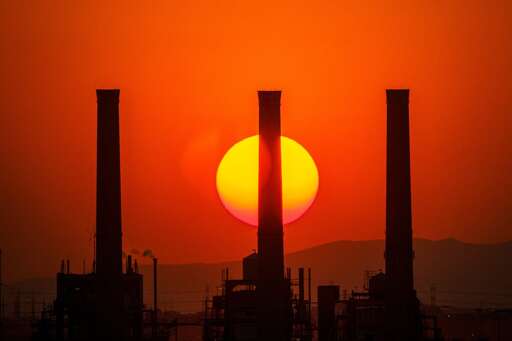
17gw is about the same size as the Hiroshima bomb - 63 terajoules is 17 GWh and the 9GW data centre produces at least 16GWs of heat. Pretty scary when looked at like that.
17gw of heat is both under and over estimate.
Caterpillar 2.5mw generators have maximum efficiency of 45%, and so 19gw is peak thermal power. that is roughly 26 hiroshimas per day.
It’s an over estimate because datacenter cpu/gpu capacity utilization is on average under 10%. It could still produce all that power for export to trap all that heat in a valley.
Does “9GW data center” not mean “a data center that consumes 9GW of power”?
Or is it “9GW of computers + 5GW of cooling + something”?
9GW should be the compute load goal, to which you need to add the mechanical and administrative loads. At higher scales they gain significant efficiencies which translates to market advantages.
its 9gw of consumption. 19gw of total heat generation.
For comparison, a blast furnace making steel uses on the order of 3600 GWh/yr and the energy comes primarily from coal.
9Gwh is a high number for a datacenter, but industrial processes use much more and much dirtier energy.
That’s also one datacenter and the largest. Whereas there are many, many blast furnaces running all over the world.
9gw if run 24/7 (capacity utilization is actually low on average in US) is 551.88 twh/year. 1500x. Natural gas is not that much cleaner than coal from co2/ghg warming perspective.
Not that it would matter for this conversation, but at hyperscalers levels, the energy required for mechanical loads is under 20% of the compute load. Wouldn’t surprise me if ~10% can be achieved at multi GW scale. Thus about 11GW total energy.