
From Raven Ridge Wildlife Center
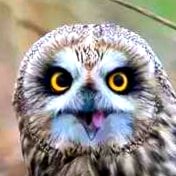
We have admitted four Barn owl nestlings. Collaborating closely with our Game Commission Biologist is essential for gathering information and tracking nesting habitats, as these owls are being monitored attentively due to their biggest threat-habitat loss.
Barn owls play a crucial role in our ecosystem and are considered a farmer’s best friend. One barn owl can consume approximately 1,000 mice in a single season, and a family of six can eat over 6,000 mice in that same timeframe. These owls prefer hunting in open, flat land, which makes barns ideal habitats for them.
When nests are destroyed or when the owls find themselves in precarious situations with little chance of survival, we can place the nestlings with other barn owls of similar size and age. The parents will continue to care for their young and can also adopt one or two additional owl nestlings into their brood.
Recently, during the Kauffman barn owl banding event with the Game Commission, one of our owls was introduced to a new family at the farm. All the owls are banded, in good health, placed in other active nests and will be ready to fledge within a few weeks.
As a wildlife center, our primary goal is to act in the best interest of the animals and ensure their survival. Having a foster parent, whether it be a surrogate or placement with wild parents, is more effective than rehabilitation alone, as it guarantees that the owlets receive the necessary survival skills.


Ooww cute fellows.
And happy cake day anon! :)
Thank you, kindly! 🙂
I’m always thrilled to see barn owls! A barnie was the only owl I’ve ever spotted in the wild as a kid, and they’ve become so rare where I live now, it makes the memory extra special.
One thing I learned this summer is that barn owl chicks can also turn into “Hitzespringer” (heat jumpers) when their nest is in a position that lets their nest overheat during a heat wave. Like when its built directly underneath a badly insulated roof. So please check your barns etc.
I knew this phenomenon from swifts and swallows. And they were hit in the last few days when we reached temperatures of 40°C and above (104°F). It only makes sence that other chicks will also flee the nest before they get roasted.
It can be very sad. I know I’ve shared a few stories discussing how in some places, traditional artificial shelter designs that have worked for at least a hundred years can now pose a danger to animals as some can now trap too much heat.
We are around 40C this week here as well this week, and my bluejays have been gathering around the small watering hole I put out a few weeks ago every morning.
In Germany the intensity and high temperatures are uncommon (and feel worse because humidity is higher) but we’ll have to get used to them and help out our local wildlife.
The good news about the barn owls: 7 chicks that jumped down were spotted by the owner who closed the doors. They informed a rehabber that collected the 3 youngest in the morning. The 4 older ones were able to climb and fled during the night. The 4 fugitives were apprehended over the day and joined their siblings. They seem to be doing well.
That is great! Just paying attention to things can really help out our animal friends. Seven healthy Barnies is very exciting!

