

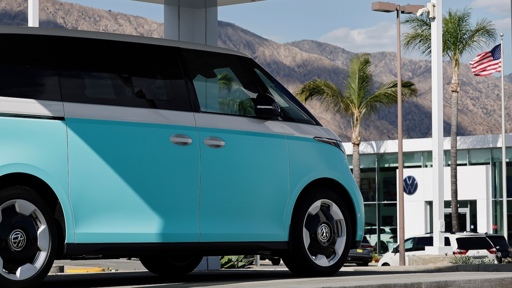
The new research finds that in order to repay the carbon debt of making a new EV, it must be driven 4,400 miles if it’s a car and 6,700 miles each year if it’s a truck. That’s already well below the 12,500 miles the average driver travels in a year, and the benefits to making the switch are likely to grow.
As the United States increasingly relies on renewables, for example, charging an EV becomes even more environmentally appealing. Campbell and his co-author also point to improvements in battery recycling as a way of reducing the emissions involved with making an electric car.
One hole in this latest study is that it doesn’t consider the cost of going electric. While previous research has shown that EVs come with higher upfront costs but lower operating expenses, it’s a thread that Campbell hopes economists pull on. He would also like to see someone better account for the emissions generated while extracting oil and getting gasoline to the pump, rather than simply the burning. But, for now, he believes the study sends a clear message.
My gas car is paid for, spare parts are cheap and readily available, and I know how to fix anything that can go wrong with it. Plus, my 2001 car doesn’t spy on me.
A new car is tens of thousands of dollars, EV parts are extremely expensive IF you can manage to find them, EVs are designed not to be serviceable, and every car made after about 2010 is basically an iPad on wheels designed to spy on you.
Add to that, I’d have to upgrade my service entrance and main breaker panel, AND install an external 240-volt outlet just to charge the thing fast enough for me to use it daily, and it all adds up to one big “fuck no” for me. It would take decades of ownership for mine to pay itself off, and I don’t think EVs last that long without needing major maintenance, which would only push that back further.
All that being said, sure keep your old combustion engine car, keep it in good condition and drive it as little as possible, you are fine this is about a broader economic misconception not about judging your particular life choices!
Regarding 3, depending on where you are it might not take any time for an EV to pay for itself. The average Australian petrol car driver spends $124 per week on fuel. The cheapest EV here costs $24,000, or $83 per week on a 7 year loan.
Recharging costs are only around $1 per day but even if it was $5 per day it’s still cheaper to drive a loaned EV than to put petrol in a combustion car.
[citation needed]
Assuming you’re in the US,120V mains outlet charging adds about 5-8 km or 3-5 miles of range per hour. If you’re really driving so far every day that an overnight charge won’t cover it, an EV surely would be very appealing due to the immense savings on fuel costs.
Using Australian figures because that’s where I am and what I know - the average petrol car driver here goes 30km per day and spends $124 per week [1] in fuel. To get a 7-year car loan to buy the cheapest EV ($24,000) costs $83 per week[2] (without any trade in considered, which would lower it further) and charging costs are practically negligible (charging off mains power for that 30km per day is only around $1 of electricity).
In other words, it’s literally cheaper to buy an EV on a loan and drive that than to fill up the tank in the petrol car you already have. People think it takes “decades” to break even without doing the maths, but when you actually work it out buying an EV will save money immediately.
Edit to add notes:
[1] According to the Automobile Association affordability dashboard, the average Australian driver paid $93.81 for fuel every week in Q4 2025, when prices were $1.82 per litre. Scaling up for the x1.32 price increase since then, that’s $123.71 per week on petrol for the average driver.
[2] RACV Green Car loan calculator
Gas prices will catch up to this line of thought eventually.
Hell, maybe gas availability.
you’re simply putting off the inevitable. I wish there were ways to easily convert conventional ICE to EV use but have yet to see anything practical for a wide range of setups.
Haha We bought the highest equipment model when we bought our ID.4 because it’s so cool.
1 headlight set cost about $1,500 because it has Matrix light. 😋
But goddam it’s a nice car IMO, and I love all the extras. From what I know there are way fewer repairs in an electric. People used to be scared about the battery, but in reality it’s not a problem.
ICE cars have lots of things that wear down that are also expensive to repair, AFAIK more so than electric cars.
Regarding the surveillance I don’t think you can get a car in EU that doesn’t have it, because since 2018 the SOS emergency call function has been mandated by law in EU countries. Ans with that present, the necessary equipment for surveillance is already installed. So it makes no difference if it’s ICE or EV in that regard.
In USA I don’t think it makes any difference either, there is so much camera surveillance in USA, a lot of it private, but it goes through cloud services, so I bet authorities can access most of it if they want. So it doesn’t help much that you don’t have it installed in your car.
It’s 1984 that has come true in that regard, the only questio0n is how much we can trust the authorities, and many places that is not so much.
Edit:
Edited the price for the headlight, because the first price I found when checking was for a complete set.
For whatever it’s worth, I kinda regret installing a Level 2 charger for my EV. Turns out I didn’t really need it, charging overnight most nights with a normal Level 1 (120V, 10A receptacle driving a 1.1 kW charger) would easily be enough for me. I drive about 200 miles a week, and get about 3.3 miles/kWh, so I need to use about 60 kWh per week. Parking overnight for 12 hours is good for about 13 kWh, so I would just need to remember to plug in most nights when I get home.
But I got the Level 2 charger anyway and just charge once a week basically.