

From Animal Behavior Conservancy
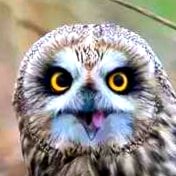
Tina the burrowing owl is one of our smallest residents, but like any small bird, she takes up a lot of space with her personality. Our Andean condor is steadily molting her primary and secondary wing feathers, and to get a sense of how big they are and how small Tina is, we stacked a newly molted tail feather against each other. This feather is longer than my forearm and not even the condor’s longest feather.
I got to see some condors and play around with some of their giant feathers when I was at the National Aviary. Those are some impressively large birds!
Why, what’s the purpose of this?! Make fun all you want, I could take out all of you!
I accidentally snuck up on the Burrowing Owl at the National Aviary and it tried to get away from me as far as possible, sitting atop the sprinkler and glaring at me with full intensity. It was the second angriest animal stare I’ve ever gotten!
Here is one of the condors as well:
Careful… don’t want the wrath of the short kings.
I’ve got nothing but love for my elevationally challenged owl friends! They really punch above their weight class. 👊
I really want to see someone make a running comic series with a pygmy dressed up in Napoleonic military attire flanked by great greys plotting world domination.
I would subscribe to this…
Oh that’s cool. The condors at my local zoo (Los Angeles) aren’t visible to the public, because they’re being raised no-contact for release into the wild, but they had 10 chicks last year.
That is awesome! (for the condors, at least)
I know some people don’t like zoos existing, but they do a lot of important projects like this that support wild animals. Also, they give us exposure to so many animals we’d otherwise never see in person, and I feel that gets a lot of people interested in protecting them.
It sounds like they have one unreleasable one that does an event 6 days a week.
It sounds like they release them not too far north of the city as well, so you may be able to see them as intended! Sespe Condor Sanctuary, Angeles National Forest, Castaic Lake, and Bitter Creek NWR show up as places to see them in the wild.