The rainbow flag or pride flag is a symbol of LGBT pride and LGBT social movements. The colors reflect the diversity of the LGBT community and the spectrum of human sexuality and gender. Using a rainbow flag as a symbol of LGBT pride began in San Francisco, California, but eventually became common at LGBT rights events worldwide.
Originally devised by the artists Gilbert Baker, Lynn Segerblom, James McNamara and other activists, the design underwent several revisions after its debut in 1978, and continues to inspire variations. Although Baker’s original rainbow flag had eight colors, from 1979 to the present day the most common variant consists of six stripes: red, orange, yellow, green, blue, and violet. The flag is typically displayed horizontally, with the red stripe on top, as it would be in a natural rainbow.
LGBT people and allies currently use rainbow flags and many rainbow-themed items and color schemes as an outward symbol of their identity or support. There are derivations of the rainbow flag that are used to focus attention on specific causes or groups within the community (e.g. transgender people, fighting the AIDS epidemic, inclusion of LGBT people of color). In addition to the rainbow, many other flags and symbols are used to communicate specific identities within the LGBT community.
Variations:
Original Gilbert Baker Design
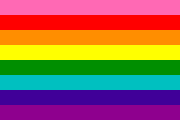
Inspired by the lyrics of Judy Garland’s Over the Rainbow, and the designs used by other social movements such as black civil rights groups from the 1960s, the Rainbow Flag was created. Baker hand-dyed and hand sewed this flag which flew at the San Francisco Gay Freedom Day in June 1978.
Seven-color version due to unavailability of pink fabric
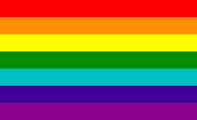
Following the assassination of Harvey Milk in 1978, many people and organisations adopted the Pride flag that he helped to introduce to the community. The demand was so great for a rainbow striped flag, it was impossible for the 8-stripe design to be made in large quantities. Both Paramount and Baker struggled to obtain the hot pink fabric and so began manufacturing a 7-stripe version.
Traditional Gay Pride Flag
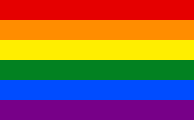
In 1979 the design was amended again. The community finalised this six-colour version and this is now the most familiar and recognisable design for the LGBT flag. Numerous complications over the odd number of stripes, including the desire to split the flag to decorate Pride parades, meant that one colour had to be dropped.
The turquoise and indigo stripes were combined to create a royal blue stripe and it was agreed that the flag should typically be flown horizontally, with red at the top, as it would be in a natural rainbow. This design continued to increase in popularity around the world, being a focal point of landmark decisions such as John Stout fighting for his right to fly the flag from his apartment balcony in 1989.
Progress Pride Flag
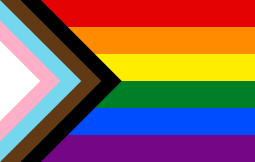
In June 2018, designer and activist Daniel Quasar released an updated version of the Pride flag. Combining the new elements of the Philadelphia design and the Transgender flag to bring focus on further inclusion and progress. This new flag added a chevron to the hoist of the traditional 6-colour flag which represents marginalised LGBTQ+ communities of colour, those living with HIV/AIDS and those who’ve been lost, and trans and non-binary persons.
This design went viral and was quickly adopted by people and pride parades across the world. The arrow of the chevron points to the right to show forward movement, while being on the left edge shows that progress still needs to be made for full equality, especially for the communities the chevron represents.
Intersex Inclusive Progress Pride Flag
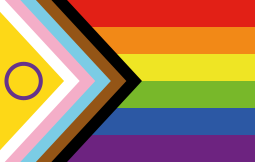
In 2021, Valentino Vecchietti of Intersex Equality Rights UK adapted the Pride Progress flag design to incorporate the intersex flag, creating the Intersex-Inclusive Pride flag 2021.
The intersex community uses the colours purple and yellow as an intentional counterpoint to blue and pink, which have traditionally been seen as binary, gendered colours. The symbol of the circle represents the concept of being unbroken and being whole, symbolising the right of Intersex people to make decisions about their own bodies.
Megathreads and spaces to hang out:
- 🐻 Link to all Hexbear comms https://hexbear.net/post/1403966
- 🐼 Hexbear Matrix Chat https://matrix.to/#/#Hexbear:matrix.org
- 📀 Come listen to music and Watch movies with your fellow Hexbears nerd, in Cy.tube](https://live.hexbear.net/c/movies
- 🔥 Read and talk about a current topics in the News Megathread https://hexbear.net/post/8466891
- ⚔ Come talk in the New Weekly PoC thread https://hexbear.net/post/8530168
- 🏳️⚧️ Talk with fellow Trans comrades in the New Weekly Trans thread https://hexbear.net/post/8652602
- 👊 New Weekly Improvement thread https://hexbear.net/post/8648910
- 🧡 Disabled comm megathread https://hexbear.net/post/8652673
- ☕ Parenting Chat https://hexbear.net/post/8595169
- 🐉 Anime & Manga discussion thread https://hexbear.net/post/8650435
- 🎩Fashion megathread https://hexbear.net/post/7228810
- 🎨 Art & Drawings megathread https://hexbear.net/post/8430281
reminders:
- 💚 You nerds can join specific comms to see posts about all sorts of topics
- 💙 Hexbear’s algorithm prioritizes comments over upbears
- 💜 Sorting by new you nerd
- 🐶 Join the unofficial Hexbear-adjacent Mastodon instance toots.matapacos.dog
Links To Resources (Aid and Theory):
Aid:
Theory:
Financial Support to the Bearsite
Link to the 🐼 Hexbear Matrix Chat https://matrix.to/#/#Hexbear:matrix.org
YOU’RE LISTENING TO SISYPHUS FM, THE HOME OF NON-STOP ROCK.
A guy in my town spent four hours sitting next to a place where the cops were lurking waiting for e-bikes and scooters to ticket for riding through a tunnel (Which they’re not allowed to do) and warning them. Given that each ticket was like 100 dollars, he probably saved people thousands.
What a champion, what a guy.
Putting the exe for every game I’ve 100%'ed in the job application “list all computer programs that you can use proficiently” box

New Megathread nerds!

- 🐶 Join the unofficial Hexbear-adjacent Mastodon instance toots.matapacos.dog
Nerd Call
@Acute_Engles@hexbear.net @AernaLingus@hexbear.net @anarchoilluminati@hexbear.net @AntiOutsideAktion@hexbear.net @buh@hexbear.net @CDommunist@hexbear.net @ClathrateG@hexbear.net @Comrade_Mushroom@hexbear.net @context@hexbear.net @corgiwithalaptop@hexbear.net @Cowbee@hexbear.net @CommunistCuddlefish@hexbear.net @CrispyFern@hexbear.net @CriticalOtaku@hexbear.net @CyborgMarx@hexbear.net @Dort_Owl@hexbear.net @ElChapoDeChapo@hexbear.net @EstraDoll@hexbear.net @FALGSConaut@hexbear.net @Frogmanfromlake@hexbear.net @FuckyWucky@hexbear.net @FunkyStuff@hexbear.net @FumpyAer@hexbear.net @GalaxyBrain@hexbear.net @gay_king_prince_charles@hexbear.net @Grownbravy@hexbear.net @GVAGUY3@hexbear.net @HarryLime@hexbear.net @hexaflexagonbear@hexbear.net @InevitableSwing@hexbear.net @Infamousblt@hexbear.net @ImHereForTheEmojis@hexbear.net @KuroXppi@hexbear.net @LeninWeave@hexbear.net @Lemmygradwontallowme@hexbear.net @LocalOaf@hexbear.net @MaxOS@hexbear.net @Mindfury@hexbear.net @mkultrawide@hexbear.net @Moss@hexbear.net @Nakoichi@hexbear.net @PaulSmackage@hexbear.net @plinky@hexbear.net @PorkrollPosadist@hexbear.net @Ram_The_Manparts@hexbear.net @RedWizard@hexbear.net @RION@hexbear.net @RNAi@hexbear.net @Rojo27@hexbear.net @SeventyTwoTrillion@hexbear.net @SorosFootSoldier@hexbear.net @Sickos@hexbear.net @Sphere@hexbear.net @Tervell@hexbear.net @VHS@hexbear.net @viva_la_juche@hexbear.net @WhatDoYouMeanPodcast@hexbear.net @Wheaties@hexbear.net @WhyEssEff@hexbear.net @WIIHAPPYFEW@hexbear.net @Wmill@hexbear.net @wombat@hexbear.net @Zoift@hexbear.net
@sharkfucker420@lemmy.ml @lelkins@lemmygrad.ml @666@lemmygrad.ml @TrippyFocus@lemmy.ml
@CARCOSA@hexbear.net @Alaskaball@hexbear.net @liberal@hexbear.net @ella@hexbear.net @KiraNerys@hexbear.net @BoarAvoir@hexbear.net @dialectical_analysis_of_gock@hexbear.net @RotundLadSloopUnion@hexbear.net @tls123@hexbear.net @cloudy@hexbear.net @IgnusNilsen@hexbear.net
No current struggle session discussion here on the new general megathread, i will ban you from the comm and remove your comment, have a good day/night :meow-coffee:

🏳️⚧️
seychelles pride flag

Happy pride!

Crazy how the T-1000 would just win in Terminator 2 if it was made today because there is probably no steel smelting plants anywhere near LA to drop it into
it’s so fucking joever


My LA Fitness wifi has hexbear blocked lmao