

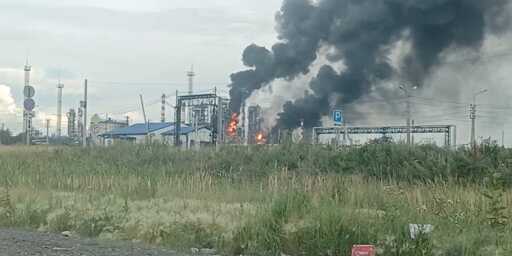
Ukraine struck Russia’s largest oil refinery, located in the city of Omsk, on Monday, marking what its forces say was its furthest-ever drone attack in the war.
The Omsk facility, which processes about 21 million tons of oil a year, is in Western Siberia and about 1,700 miles from Ukrainian territory — roughly the distance between Los Angeles and Houston.
Perhaps, but you can’t tell me Russia can build them faster than Ukraine can destroy them. And in the meantime it means millions of fewer barrels worth of greenhouse gas emissions.
They can be built outside Russia.
Sure, but that’s not a solution for Russia’s own energy demands
I was thinking more of the globalized market for oil.
If Russia can export less refined oil, that can encourage the construction of new refineries elsewhere. This could negate the impact of drone attacks on reducing CO2 emissions.
But as others have said, there’s demand destruction that can have an effect.
How many years does it take to build a refinery from scratch? 3? 8? And perhaps a new refinery elsewhere will be a tad cleaner?
The real outcome however, could be that Russia tries to quickly apply bandaids to their broken infrastructure to get it up and running again fast. And that way their oil refining could become more polluting than ever.
I think on the global scale, Hormuz has a way bigger influence on helping many countries move towards renewables faster.