
@dream_weasel@sh.itjust.works TIL Philipp Mainländer, David Benatar and countless other competent philosophers were/are all teenagers doing teenager ramblings!


Dæmon S.
Migrated to Catodon.rocks: @dsilverz@catodon.rocks
- 11 Posts
- 278 Comments
Joined 1 year ago
Cake day: July 13th, 2025
You are not logged in. If you use a Fediverse account that is able to follow users, you can follow this user.
@ennof@feddit.org @LuminousLuddite@lemmy.world @technology@lemmy.world
As if it were a matter of caring or wanting/not wanting to use websites… It would be really nice to live in such a world where one could have the luxury of “choosing”. Unfortunately, it’s not this world for many people and many peoples.
To exemplify this, there are websites I, as a Brazilian, can’t simply choose whether to use or not, because there are government and bureau websites for services through which I’m expected to comply with citizen things I didn’t ask for (as I didn’t ask to be born in this world to begin with). Online services such as “DETRAN” (state-wise transportation bureaus where one must renew one’s driver’s license), which I remember having to click a reCAPTCHA in order to proceed with transportation-related citizen duties. I can’t have the luxury of saying “you know what, I’m not renewing my driver’s license which has become my ID for a plethora of services not even related to driving, which means I’m going ID-less and becoming a legally-indigent person in the eyes of the next cop that requests my ID”.
Hell, I can’t even choose to have a degoogled phone because our customs (Receita Federal) will likely deny the entry for any “unlicensed device” (i.e. devices not licensed by ANATEL, Brazilian telecommunication agency). And installing a custom ROM in any available device is not without the risk of bricking the device (and losing a monthly minimum wage worth of money spent with said device) especially for someone like me who never installed custom ROMs.
Again, would be really awesome to live in the world you described where one could afford “caring to use” things…
 2·6 months ago
@Grimy@lemmy.world @a_gee_dizzle@lemmy.ca
“Some free advice? You ever get back there, you hoard toilet paper. You understand me? Hoard it. Hoard it like it’s made of gold. 'Cause it is.” (Chuck Shurley, Supernatural TV series, S05E04)
@X@piefed.world @anon6789@lemmy.world
TIL the Tytonidae (barn owls) do the same “one-leg perching” that of Athene cunicularia (burrowing owls). Lol


 1·7 months ago
@shads@lemy.lol @asklemmy@lemmy.ml
LOL! It’s a funny thing from us Brazilians: whenever we see/hear mentions of either Brazil and/or unique national/regional Brazilian aspects, we tend to get this ecstatic feeling of “Brazil mentioned”. Glad you people enjoyed it! 😄

@shads@lemy.lol @asklemmy@lemmy.ml
Brazilian Portuguese: “Por gentileza, empilhe as cadeiras ao final do dia”.
If colloquial or more informal translations are desired:
- “Empilhar as cadeiras não faz cair a mão” (roughly “you won’t lose your hands if you take the time to stack the chairs”)
- “ô mossss, empilhascadêra fazenofavô?” (A very informal transcription from “Mineiro” (people from the state of Minas Gerais) accent for “Hey girl/boy, [can you] stack the chairs, doing [everyone] a favor [please]?”
 241·8 months ago
@Solumbran@lemmy.world @pglpm@lemmy.ca @linux@programming.dev
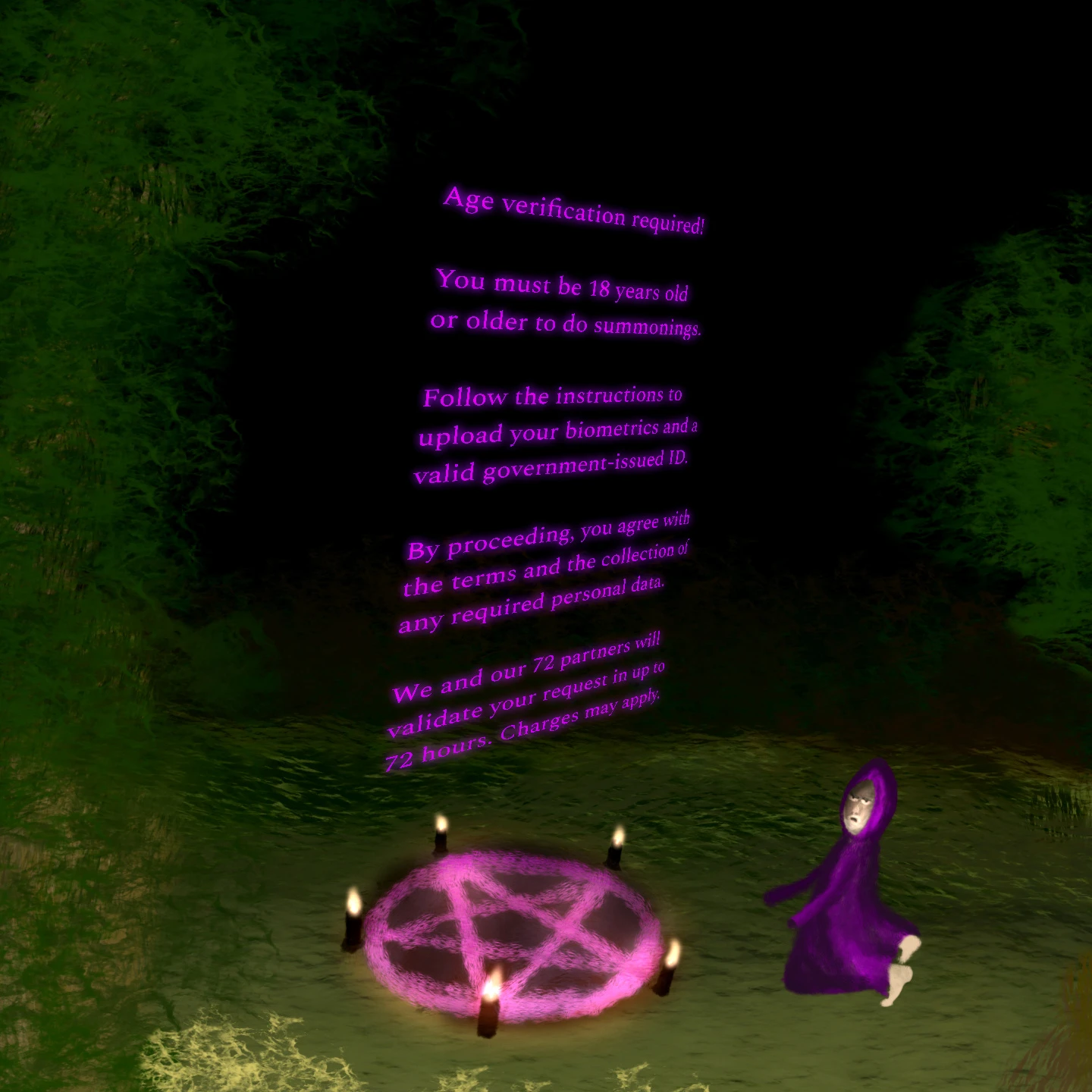
The Brazilian flavor of age checking explicitly prohibits self-declaring (“vedada a autodeclaração”). Estimation of age via selfie or behavioral analysis, as well as the need for government-issued IDs, perhaps validation via credit card microtransactions, are some of the accepted age verification mechanisms for Lei 15211 (“ECA Digital” or, more informally known as “Lei Felca” due to the involvement of a YouTuber sub-celebrity on getting this thing to Brazilian lawmakers). Doing age bracketing via self-declared mechanisms, such as birthdate input or the usual consent button, risks fines and other provisions.
KYC (“Know Your Customer”) is, deep down, what these laws are going to be about, ID checks as sine qua non part of purposefully vague-worded laws with broad and outreaching enforcement, so tech organizations and companies worldwide, especially the smaller ones, will eventually find themselves in a situation where they are legally compelled to implement everything that’s being pushed as part of these dystopian laws. After all, it’s far from being just a Brazilian or a Californian thing.
Currently, yes, we’re seeing this law-concept restricted to a handful of places such as some USian states, as well as countries such as UK, Australia, Canada, now Brazil… Zoom out, however, and you’ll realize how this thing is gradually spreading worldwide because this is the only way for age verification to get effectively enforced.
You read it correctly, those laws are very likely getting to more and more countries, eventually turning KYC into part of international, industrial standards. Nothing too hard for big corps to do on their own, such as Google and Microsoft, even Canonical and Red Hat which are large companies, but small companies will end up being pushed into relying on non-free third-party KYC services in order to comply with age verification.
Such situation would end up benefiting the big players, with KYC services such as Persona becoming the new ubiquitous Cloudflare when it comes to this digital landscape. KYC gates, in this sense, would become the new CAPTCHA, Biometrics-as-a-service would become the new normal, true FOSS projects would become unlawful a priori while large corporations would thrive with another data point for tracking and advertising, and as the tolerance bar gets lowered, people will end up used to it, because any attempt to be against it will lead, at best, to social ostracization…
I don’t know, maybe I’m being overly pessimistic about it, but I can’t help but notice how dystopian things, some of which were long foretold and were warned about, are slowly taking away our privacy and freedom…
@LadyButterfly@reddthat.com @nostupidquestions@lemmy.world
There’s an eccentric hypothesis I thought of: maybe people used the fossils alongside the surrounding stones for buildings, without ever noticing the fossil. This makes me wonder how many ancient constructions, from simple huts all the way to entire castles and fortresses, contain fossils as stones.
And this doesn’t even seem to be limited to fossils: if we jump to Neolithic onwards, then fast-forward all the way to contemporaneity, some of the artifacts from back then (e.g. figurines such as Venus figurines, clay tablets, vases, papyri, petroglyphs, etc) likely ended up as part of buildings. Maybe those artifacts ended up unwillingly torn apart and ground by heavy machinery (e.g. backhoes, other earthmoving machinery, mining machinery and drilling machinery for petroleum wells, although these often involves prospecting, etc).
The artifact doesn’t even need to be that old: I once saw a news story about someone who used a “hammer” for decades before discovering it was actually a WWII grenade.
 1·8 months ago
@WhatsHerBucket@lemmy.world @asklemmy@lemmy.world
While part of the Cicada 3301 (and similar) puzzles and the techniques required to solve these puzzles revolved around cybersecurity (i.e. inspecting a website looking for vulnerabilities that would lead to a hidden webpage, or sandboxed environments where SQL injection were required as part of the techniques to discover a solution to the current step, etc), there was this multicultural factor, fun facts and trivias (e.g. nods to certain philosophical or esoteric books; the “cicada” itself is a potent symbol across mythology and philosophy such as Phaedrus). Then there were entire theories about the identity of those in charge of these puzzles; entire internet lores emerged, adding to the cultural factor.
Meanwhile, current cybersecurity events such as Hackathons, while truly interesting and valuable source of technical knowledge, these events seem, at least to my subjective perception, to be exclusively focused on cybersecurity with occasional (if any) cross-cultural nods (e.g. few to none “TIL about Ancient Egypt” moments).
And back in my initial post, I was also referring to what I could call “Cicada 3301 puzzle ancestors/derivatives/copycats” or, how it’s likely known nowadays, ARGs. Orkut and bulletin boards (dark web BBSes as well) used to have these random people suddenly posting challenges out of nowhere, challenges whose decipherment led to funny or ominous outcomes; people bringing lores and stories about how they were “time travellers” (inspired by stories such as that of John Titor; John Titor themselves was also an example of that).
I used to participate with several other people on trying to make sense of these puzzles and lores, I used to laugh at the funny theories that emerged and, well, we learned a lot of new concepts across disparate fields of human knowledge. Now it all feels a relic from a distant past. Maybe it’s just the nostalgia speaking.
@wizardbeard@lemmy.dbzer0.com @asklemmy@lemmy.world
Pretty sure a lot of kids call them alternate reality games now
Exactly. One such example is the “TikTok time traveller”, something that became quite popular among TikTok youth when the “time traveller” (who was actually some kind of security personnel employee who had some clearance to get to usually-crowded places before commercial hours, before getting crowded) used to post ARG videos.
But past, grand “ARGs” often used to involve physical breadcrumbs such as the geocaching mentioned here by hendrik. Cicada 3301 distributed and glued pamphlets to public utility poles around the globe.
The closest thing kids got to IRL-based ARG puzzles nowadays would be that “Pokemon Go” game (that is, if this game still exists, given how its underlying purpose, which was crowdsourcing the training of delivery robots, was achieved)
Personally it seems to me like most have moved into videogames and game lore spaces
Yeah, pretty much this.
Also, maybe some niches within esoterica spaces (which is particularly the field that currently interests me the most) still persist, especially considering how the knowledge involving Hermetic Kaballah still covers ciphering-related concepts such as Gematria (letters as numbers, numbers as symbolically powerful) and sacred ratios.
Unfortunately I’ve been struggling to find these spaces since I left a Luciferian community I used to participate. It feels to me like either esoterica didn’t join the Fediverse, or esoterica groups could only be found in hidden invite-only instances (many of the interesting occultist art I manage to find is from mainstream platforms such as Facebook and Instagram).
Also other games have used these sorts of puzzles too, like noita, elite dangerous, and risk of rain 2 that had its most recent dlc page on steam initially drop with no fanfare and entirely ciphered.
Exactly. Kerbal Space Program too, with a SSTV easter egg when the player gets to Duna. Considering the way games are being “vibe coded” and enshittified nowadays, it’s becoming more and more of a relic from a golden era of gaming, sadly.
like the incredibly obvious hidden text in this comment.
It took me several minutes looking at your comment in search for a hidden message until… LOL! Now I’m thinking if it would be appropriate for me say “I spotted it” or “good one!” given the subject in your hidden message 🤣
@hendrik@palaver.p3x.de @asklemmy@lemmy.world
Well, computer programmers still do things like Project Euler and code wars. Some people go Geocaching and more organized events which include riddles and different places. We got Escape Rooms…
I recognize some of it. I heard about Geocaching (boxes and pen-drives hidden in forests and public places), code wars (is it code golfing? It’s something I often catch myself doing in a lonely manner) and vaguely about the other two.
People still listen to shortwave radio and figure out whether number stations change due to the Iran war
Oh, yeah, UVB-76 and similar! I used to listen to these. Also, part of my journey involves amateur radio, as well as tinkering with methods such as voice inversion, modulations and protocols (I once implemented from scratch the encoding method from “EAS broadcasts”).
I read people tried to use modern AI on the Voynich manuscript and other older riddles
As I replied to RoidingOldMan, AIs fail when it comes to uncommon ciphers. They can parse acrostics and, especially, poetically coded language, but they can only get so far with ciphers involving different ways of spelling letters or doing nested layers of calculation (they famously struggle with “how many r’s are in strawberry?” kinds of prompt). And, as I said to RoidingOldMan, ciphers and coded language seems to be a perfect weapon against the indiscriminate scrapping from clankers.
It’s probably all out there
Yes. Unfortunately, it feels to me like this kind of community became unreachable, and your next sentence perfectly explains why:
just the internet changed, and now it’s almost impossible to find in the big haystack and walled discord rooms etc
… and I’d add another aspect as well: algorithms. Back when I still used Youtube, I noticed how the “algorithm” was somehow programmed to shadowban ciphered content.
For example, I used to post videos involving ciphering/steganography and, when I tried to look up for my own content using a whole other IP as a guest (as if I were another person), my videos and comments were simply invisible (thus, a shadow-ban).
A similar thing seemed to happen for Facebook and TikTok. Those platforms weren’t removing the content, they were actually limiting the reach, and, well, there’s no purpose on publishing a content that won’t make it to anyone. There’s an unknowable amount of content right now lurking on social media platforms, but unreachable due to shadow-banning.
You’d (on average) be mindlessly doomscrolling there, these days. Not actively look for puzzles to solve.
I kind of do both. In Lemmy, I often doomscroll and consume. But I also creating things sometimes (even though I end up creating to the void). That’s why I don’t have a Lemmy account, but a Sharkey, because it offers both worlds: I can interact with Lemmy (as I’m doing right now) while I got a personal microblogging feed where I post the things I make.
@RoidingOldMan@lemmy.world @asklemmy@lemmy.world
Not sure I understood your question.
You didn’t, but that’s okay. I was asking about my perceived lack of people’s engagement with content (not just mine) that requires some decoding, either technical (ciphers, such as Caesar, Vigenère and Playfair) and/or literary (steganography, such as the one I employed in my post) and/or symbolic (i.e. metaphysics references, “creative linguistics”, metaphors and “coded language”, semiotics). You probably don’t know (or don’t remember) the Cicada 3301 charades. I’m saying about things like that, from a time where the Web was a deep sandbox for creativity.
What you might think as a text may be, in fact, a carrier for subtexts. In such cases, the visible sings while the invisible screeches, but few can perceive and extract the high-pitched nocturnal screech beyond the clear song… even worse, some people can’t even fathom the song. And as someone who hoots and screeches in the night, I can’t help but miss the times where the world were more receptive to these screeches, now every high-pitched noise is said to be “AI” because of how AIs have been annoyingly beeping lately. And, to break the fourth wall, this very paragraph is such an example of a text with a subtext (in this case, symbolic/poetic language), this is what my thread is about.
If it’s on the internet archive, then it’s probably been scanned by AI.
Ciphering and steganographic techniques aren’t limited to the existing ones. I myself sometimes enjoy creating new methods, many of which are far from trivial for current Language Models to decipher (some of my techniques involve multiple steps for decoding, some involve conceptual references and semiotics). I tested the clankers against many of my creations and, in most situations, they all failed laughably.
Then the people, especially here in the Fediverse, often complain about LLMs but, as far as I can perceive (especially across the Fediverse), people seem to refrain from engaging with (or they’re unaware of) the very form of content that would protect them from LLMs, because those kinds of texts (such as this one I’m writing right now, and the one I initially posted) often “sound like AI” or something.
@pennomi@lemmy.world @politicalmemes@lemmy.ca
How will they force online checks
In case of Brazil, it’d be through the full power of the corpo-state full with regulatory agencies, judiciary, financial system, and police force.
Either companies and platforms comply, or the telecommunication agency (ANATEL, Agência Nacional de Telecomunicações) would simply subpoena all Brazilian ISPs to block IP addresses and DNS entries, alongside the courts applying daily fines for disobedience shall those have any Brazilian bank accounts.
Big corps such as Google and Meta and Apple, with enough money to burn on Persona and au10tix KYC services, won’t even be needed to be forced to comply: they got a fresh golden goose of tracking data!
It’s the small companies and orgs who’ll either: go bankrupt trying to get the KYC on their systems, cease activities altogether, geoblock Brazilian users, or going the Non Serviam way with the risk of having the wrath of the state.
As for the end user, the whole weight of this conundrum between state + big corps + cheerleading herds of complying citizens vs any company and org who dares not to comply will push them into compliance, because we live in a sick world where one must have a damn smartphone to be allowed to “live in society”. Brazil heavily rely on digital payments (“Pix”) and many things have been digital-only since the COVID-19 pandemics.
Dissidents such as me, who managed to convince themselves of a quasi-Luddite way of life, the item “living in society” ruled out from “living plans card”, well, who knows what will happen? I got no money for them to seize because I’ve been long unemployed, no belongings to get auctioned, nothing I could lose, except for the reminiscent illusion of mundane freedom which is not being inside a jail yet…
just have the OS lie.
Even if the OS and browser managed to trick apps and websites with fake KYC authorization tokens, that would be illegal.
you should already be on a VPN regardless.
Before this law existed, there’s precedent for past legal decisions where VPN was explicitly prohibited by Supreme Court, and people were somehow discovered using VPN (packet sniffing from ISPs, I guess) and were fined for doing so (not mere “you owe to the State”: banks are subpoenaed to lock assets, and the fines get autopaid).
Also, if we zoom out and look at the forest, it’s spreading worldwide. If enough countries pass their flavors of this “age validation”, eventually there’ll be nowhere left for a VPN to circumvent anymore. VPNs must be in some country to operate.
I mean, don’t get me wrong: I’m not complying, I’m currently using an outdated Linux on an old laptop, I haven’t updated for a while (thing is expected to get at the OS level) so I won’t have any age check mechanism anytime soon on PC. But I know how it’ll eventually get me one way (coercion by social comformity) or the other (coercion by force).
Maybe I’m exaggerating, I don’t know… This world is truly depressing.

@pennomi@lemmy.world @Sunshine@piefed.ca @politicalmemes@lemmy.ca
There’s the big deal (already a thing in the country I exist in):

 11·8 months ago
@Lauchmelder@feddit.org @privacy@programming.dev
You’re kind of not really engaging with me in good faith, but I’ll bite anyways.
My tone, which is baseline pedantic and dry (just see my past comments on Lemmy and you’ll notice that), partly due to the fact that I’m a ESL (English as a Second Language because I was born a Portuguese-speaking Brazilian) neurodivergent person, may sound further “aggressive” precisely because this kind of ongoing theme (age checking laws, childhood, etc) deeply touches me, but in no way I mean to be aggressive or acting in “bad faith”, it’s just my somber, dry tone speaking. I’m neither intending to attack you nor your person, just trying to question your arguments.
proves nothing. Not because you’re a rando, but because there’s no control. That’s why I said you need to prove that social media is reducing teen suicides, compared to the time before social media.
This kind of study, scientifically speaking, is hard to achieve when there’s no such thing as a “control group”. It also likely varies across countries, cultures and demographics.
To make matters worse, mental health awareness is quite a recent achievement. Not too long ago, mental health issues were hardly diagnosed. While proper diagnosis still struggles nowadays (with lots of under-diagnosed cases due to systemic issues from lack of healthcare access to prejudice), there seems to be no proper way to compare depression and suicidality before and after the advent of social networks.
At least to me, it seems like a thing that can’t be proved easily, not withi the full scientific rigor required by a peer-reviewable, double-blind, scientific proof.
Those sites provide their content for logged-out users anyways, so children can still view them regardless.
Viewing is being a guest and, at least in my case, I wasn’t just a guest: I actively participated, I actively talked to people, this is how I got to expose my questions and, hopefully, getting answers, because the existing exchanges aren’t always enough to cover a specific question one may have.
Learning isn’t simply about receiving knowledge without having a voice to talk back. Although much of my formation was self-taught, I still needed people to answer me things. Yeah, there are courses, but courses can be unaffordable for some demographics, because they cost real money, and this is where Internet used to thrive the most: the social connectivity offered for free by platforms and websites such as Orkut, BBSes, mailing lists, these things allowed for people to get what they couldn’t afford otherwise.
@FiniteBanjo@feddit.online @privacy@programming.dev
First of all, my comment very clearly says the internet needs to remain anonymous, and what I mean by that is any age information you give a company should be voluntary and by its nature unverifiable.
In this regard I agree with you.
By social media I was referring to large communities: things such as Facebook, posting and commenting on YouTube, forum aggregators like Reddit and Mbin, etc. Basically, those entities shouldn’t be allowed to offer those services or knowingly provide them to minors.
Back in the days, Orkut was a large social media, especially here in Brazil where I exist. Orkut communities were a pretty popular feature, and there were several nice communities involving tech and programming, science, etc.
I learned a lot of things back then, thanks to Orkut communities. But I was a minor at the time, so if Orkut weren’t to provide for minors the intellectual connection that shaped the nerd I am today, I wouldn’t have the same amount of knowledge-pursuit drive, let alone the knowledge itself (or this biological existence, as I explicitly said how I’d have been committed suicide having nowhere else to mentally let go from my childhood nightmares).
Although… your suggestion about having limited features for minors (e.g. no video calls) while still allowing them in, is something I could sort of agree with.
@Lauchmelder@feddit.org @privacy@programming.dev
but unless you can prove that social media actively prevented teenage suicides from bullying and abuse
I didn’t kill myself (yet, although I think of death and Death Herself quite on a daily basis; Dark Mother has been in my thoughts for a long, long time). The fact I didn’t kill myself during my teen ages and talking here is a proof that the digital life somehow worked as a coping mechanism. But, well, you said yourself: my “story” is “merely anecdotal evidence”, I’m just a rando nobody, anyways, so who cares if I killed myself during my teens? 🤷♂️
You also don’t need social media to learn programming, there’s plenty of other resources
Your phrase is “things like social media”. Do you know what a discussion board is? Not to mention things like StackOverflow.
Also, social media isn’t evil in itself. I mean, just look around us: we’re right now taking in a programming community, in, guess what?, a social media platform! If social media was innately bad or something, we wouldn’t be here.
@FiniteBanjo@feddit.online @Sunshine@piefed.ca @privacy@programming.dev
I started using computers when I had something between 8 or 9 years old and, thanks to my participation in platforms such as Orkut and programming/tech-related discussion boards, I became a developer. You read it right: I started tinkering with programming when I had only 9 years old. And now, at 30yo., although I’m currently unemployed, I have a curriculum comprised by 10 years worth of job positions, which would place me as a senior DevOps.
What you’re proposing “banning kids from things like social media”, would lead to kids like the past me 8yo being unable to pursue a hobby and, to a certain extent, a refuge from the scholar bullying and CSA I vaguely remember having suffered from cousins (therefore, the harm I suffered was not the Internet: it was beyond the Internet). If I were banned from using computers until I completed 18, I’d likely not have completed 18, because I’d be long dead by suicide, because you bet I’d killed myself during my teen ages if I had no digital refuge to the horrors of real life.
You’re proposing kids like the past me, who will continue suffering bullying at the school, who will continue suffering CSA at their households (because age checking does nothing to prevent those offline dangers), you’re proposing to take away what’s possibly their only refuge. Such a proposal will lead to suicides among children and teens, you shall know.
I truly hope you understand what you’re advocating for.
@shittydwarf@sh.itjust.works @lemmyshitpost@lemmy.world
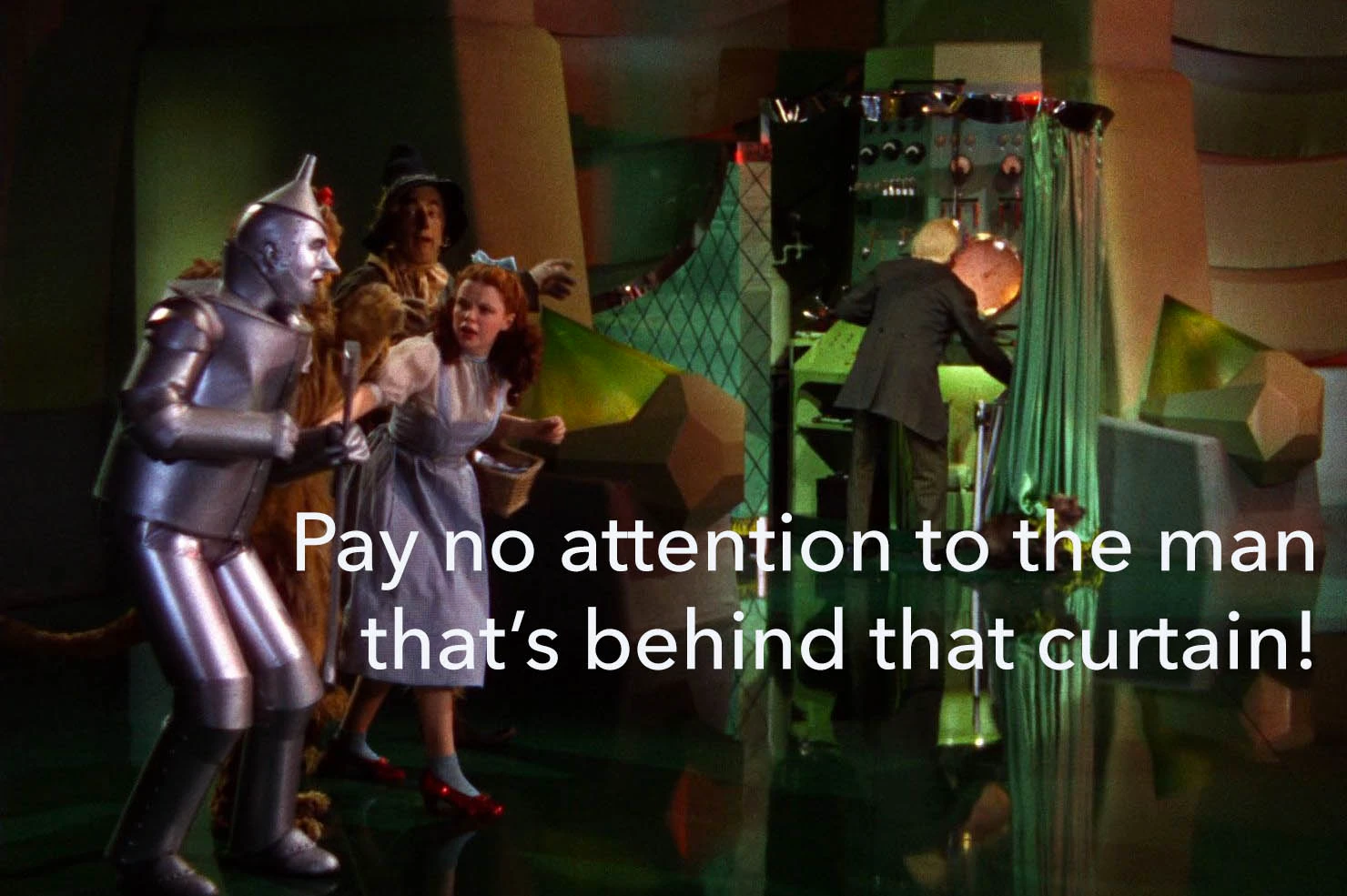
Quotting my own microblogging post from minutes ago when I learned about the death:
Year’s 2026. Chuck Norris, yes, that Chuck Norris, just died. Chuck Norris, the Chuck Norris, died, could you imagine it? Yeah, welcome to 2026. It’s still March… Miss 2020 already? You should!
Person was a fash, but to me art isn’t the artist, so when it comes to the fictional , “invincible” character, it’s quite a symbolical death… Are y’all ready for the remaining of 2026? It sure gonna be M.A.D. (not just “mad”)!





@skarn@discuss.tchncs.de @Solumbran@lemmy.world @linux@lemmy.ml
Have you considered the possibility that, by “finding a bug” and possibly “suggesting” a “patch”, the LLM could be smuggling another bug unbeknownst to the vibe coder(s) and/or smuggling a technical debt?
I say this as someone who’ve been coding since my 8s (now I’m 30), someone who hasn’t the tribalistic anti-AI sentiment (I even use LLMs sometimes, particularly the non-Western ones such as Deepseek and Qwen) but understands LLMs enough to know how the (current, state-of-the-art) stochastic parrots shouldn’t be trusted the source code of any slightly serious project, especially a full browser that Firefox is. Chances are devs are going to blindly trust and obediently stage-and-commit whatever the parroting machine spits out, and this can end up really messy. Given the ongoing pivot to AI from Mozilla, I doubt they’re worried about the consequences of vibe coding, though.