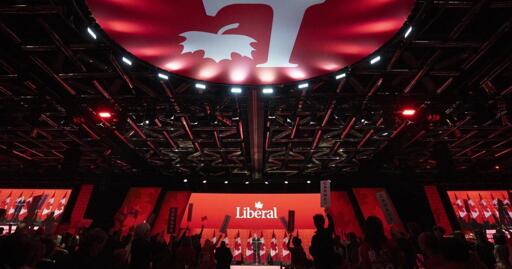
A new poll from the Angus Reid Institute suggests Canadians are giving Prime Minister Mark Carney’s government a passing grade in its first year of international relations, but it has failed to meet expectations on affordability issues.
The poll asked 2,013 Canadians a series of questions about the government’s performance since it won the election on April 28, 2025.
Last spring’s election campaign was dominated by the trade war with the U.S. and centred on who was best positioned to handle the relationship with the mercurial President Donald Trump and the economic turbulence of his tariffs.
A year later, just 31 per cent of those polled said they think the Canada-U.S. relationship will be the top concern for the government in the next year. The No. 1 priority for 52 per cent of respondents was reducing the cost of living.
They’re not gonna, a requirement for the direction they want Canada’s economy to go in is the continued exploitation of workers within the state’s borders. They’re going to respond with a number of neoliberalized subsidy programs at most to deflect criticism for a few years. If we’re lucky, some tax credits. Libs having a majority has basically left us on our own, start focusing on municipal and provincial politics and see what can be done at those levels (which is a lot).
Appreciate the perspective. Thanks for posting.
Costs need to come down, of course, but I’d prefer we focus on decoupling from the US in every way possible.
Best I can do is AI datacenters.
Powered by a new
Albertannational project pipeline
“Once again, we will be cutting taxes. The average Canadian will receive 48$ more next year on their income tax to help them alleviate the rising cost of living. Additionally we’ll be cutting taxes for companies selling groceries and also for housing promoters which will cut down on their costs and hopefully be reflected in their prices.”
Meanwhile, cost of living is still crazy because companies pocketed the difference and grocery prices increased prices slightly more so Loblaws can grab that extra 48$.
Unfortunately, the US’ behaviour is a significant contributor to costs here going up (although not the only one), so it’s difficult to decouple them.