- cross-posted to:
- energy@slrpnk.net
- cross-posted to:
- energy@slrpnk.net
You must log in or register to comment.
The good thing is: They can power air conditioning systems for free when you most need them, and the grid is at risk to fail. Pakistan had a rapid buildout of such home systems for this very resason.
All I want in the world is permission to drill holes and fit A/C. I’d pay for it too.
Ask for forgiveness not permission.
Just plaster the holes when you move out.
Or get the famous Midea PortaSplit
They’re not going to give you permission or forgiveness, they’re going to charge you $5k for putting a 3 inch hole in the wall, because they can.
These will not make enough power. They will also shut off automatically when the grid goes down.
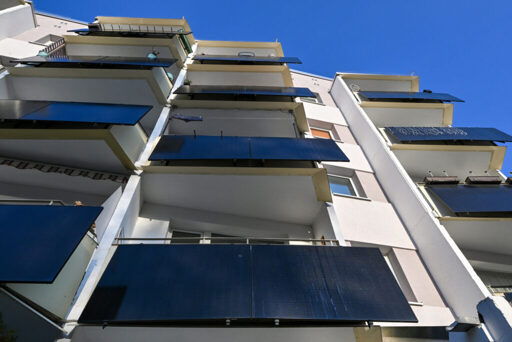
That’s great. This is not that. This is “plug in solar” or “balcony solar”.
According to my information, a split A/C like Midea Porta Split could require about 5-10 kWh a day. Balcony solar panels can easily have an installed power of 2kW. However, at least in Germany they are limited to an output of 800 Watt, for safety reasons (in case the wiring in the home has a low max current). That might be 3kWh a day on sunny days, or or 8kWh if using a battery. So, they will not be able to power all of the A/C, this is right. In that case, stationary installed PV panels would be more economical in the long run - but they are a far larger investment, and the installation costs are, in Germany, relatively high.
But it is much better to do a bit, albeit imperfect, than to require perfection, and do it never.
Yes, there are a number of variables, primarily the temperature delta, and your local regulations.
Another very big factor is building insulation. What helps to avoid heat getting out in the winter, helps equally well to prevent heat getting in in the summer, with the result that much smaller wattages are needed.
Depending on your jurisdiction, particular in the EU, the micro inverters are usually not allowed to keep running if the grid fails. It of course still helps the grid to not fail in the first place by reducing load.
That depends on the inverter and irs use case. The standard German ones are always connected to the grid and switch off when the grid fails. The can be complemented by a battery, which stores cheap self-produced electricity for later use. Depending on the type of electricity meter, they can also cause the meter to spin backwards. In the environment of Germany, which has a very very stable grid, all this makes good sense.
But you can also get inverters and batteries for “insular” systems, like for camping, which are not grid-connected. These will be more useful in countries where the grid is not stable. And then, you could combine both modes if the inverter circuitry allows that (or you switch inverters) - similar to an EV which is sometimes connected to the grid, and can act as a home battery, and sometimes not.
Our inverter (don’t know if its a micro or not) switches off but has some backup power plugs, where solar/battery power will be available in case of the grid going down. Good for the fridge and freezer.
The stuff North Koreans and Germans have been doing for years, oddly enough.
And Americans. I swapped out some lead 200Ah batteries at home yesterday for 280Ah LiFePO batteries which cost me half of what the lead-gel batteries did 5 years ago. And the lead ones started to die already